2025 Harvest Report – Sonoma
The 2025 growing season in Sonoma County delivered a steady, mild, and ultimately high-quality vintage. The pursuit of complexity and balance in a great wine is, fundamentally, a story of the season. To stand amidst the ancient, dry-farmed vines of our Estate Sonoma properties—Lytton Springs and Geyserville—is to be a student of that story.
2025 Vintage Review
The winter brought a third consecutive year of above-average rainfall. We received over 40 inches of rain, similar to the high rainfall totals of 2023 and 2024.
Winter of 2025 behaved much like winter of 2024. 2025 spring was warm and consistent. This led to a very good fruit set and healthy, robust vine canopies.
The most defining factor of the 2025 season might have been the absence of damaging heat spikes. While 2024 saw a scorching July that reduced crop load in sensitive varieties like carignane and petite sirah, 2025 was “delightfully uneventful” in its moderation.
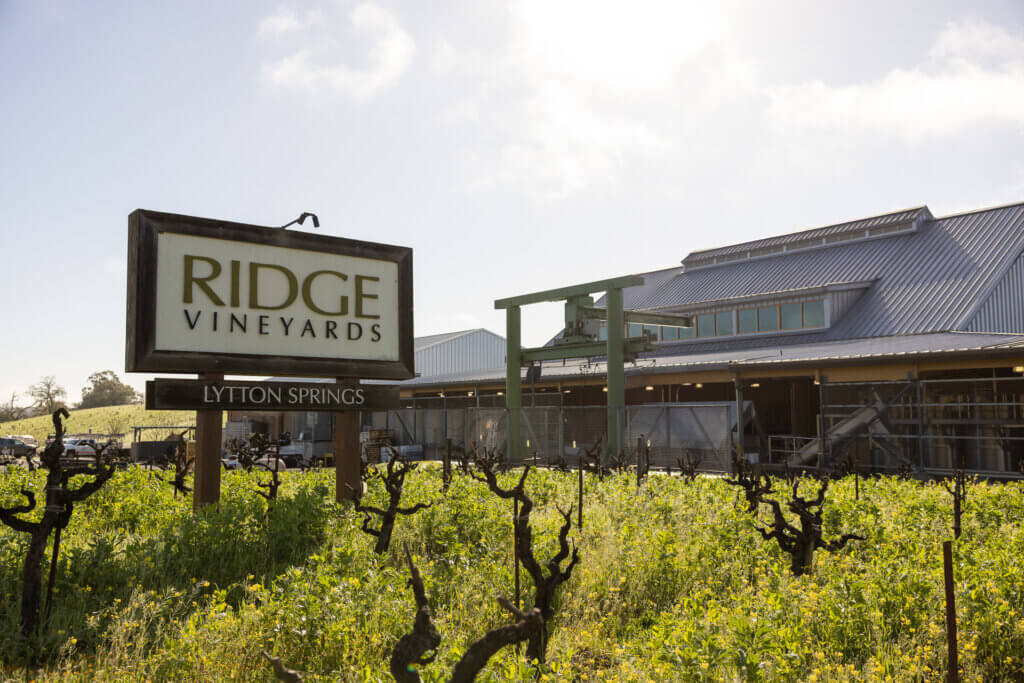
Summer was characterized by a cool and foggy July, followed by a moderate August. This allowed for a long, slow maturation period, which is ideal for preserving bright acidity and developing concentrated flavors and achieving full phenological maturity. The 2025 season, while cool, had enough accumulated warmth to ensure maturity for all varietals without the risk of an underripe crop. In comparison, 2023, with one of the latest finishes on record, where some late-ripening varietals struggled to achieve full ripeness.
Harvest Begins
Once harvest began, it was a slow and measured pace that spanned 51 days. This pace allowed us to make calculated picking and pressing decisions. In some years, all the Sonoma zinfandel vineyards are ready at once, and we must make the difficult decision to press some tanks a bit earlier than we want to, simply to free up a tank so we can continue to crush the procession of fruit coming into the winery. This year afforded us time and space, which are gold during harvest.
Harvest began on August 19th, with a focus on early varieties from Contra Costa County. Always first to the party, the carignane from Sandy Lane Vineyard in Antioch tasted delicious by mid-August and kicked off the season for us.
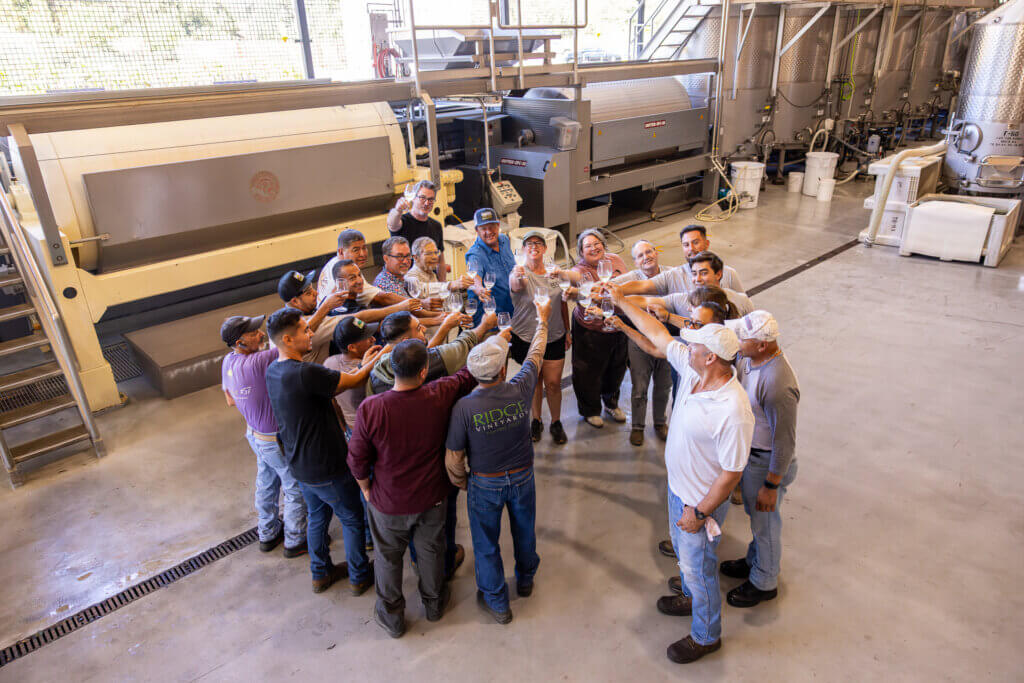
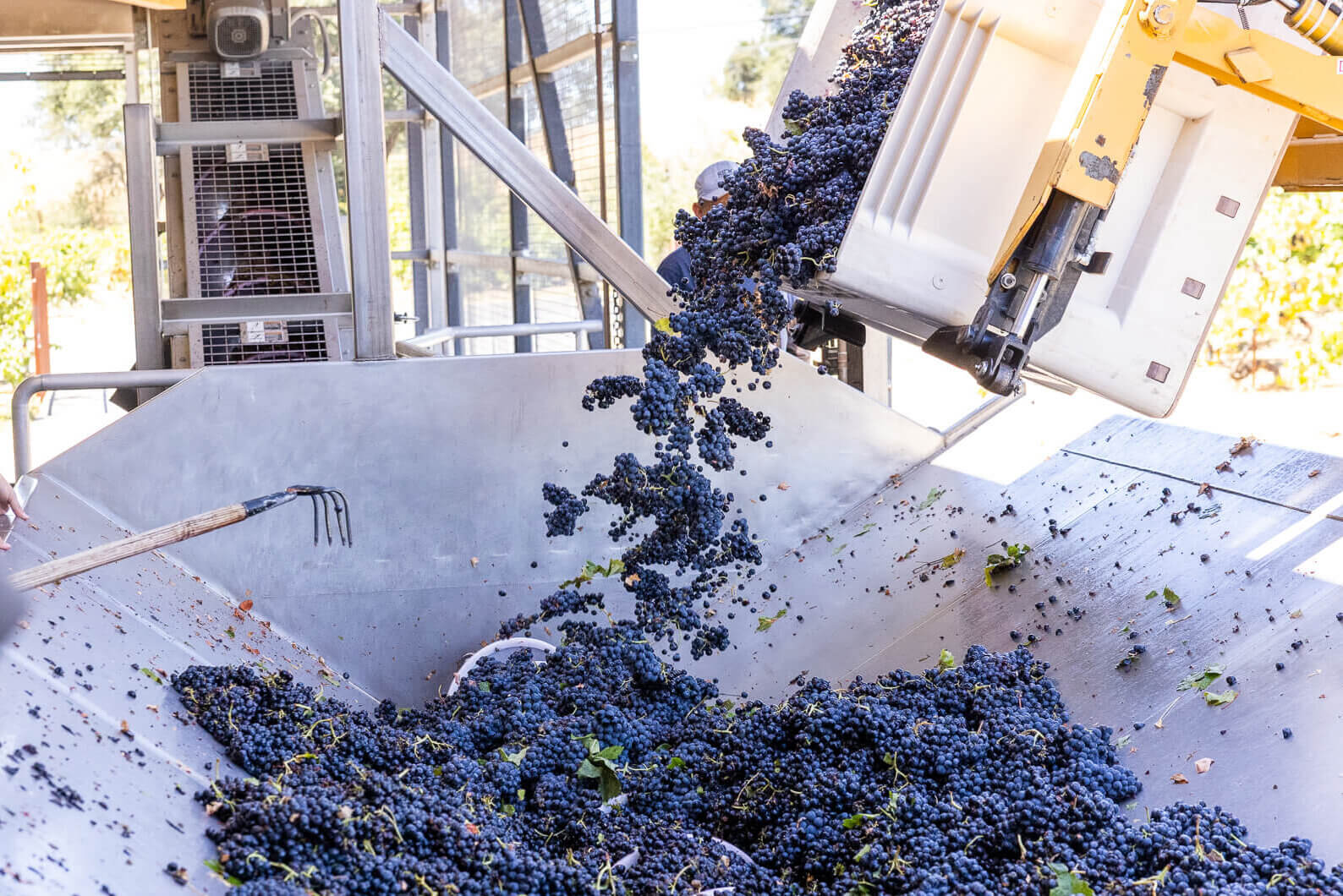
Three days later, the zinfandel from the neighboring Evangelho Vineyard was ripe. We source zinfandel, carignane and mataro from Evangelho. This vineyard was planted in Antioch in the 1880’s and is dry-farmed and own-rooted. Interestingly, this vineyard is not planted to a traditional mixed field blend. The blocks are isolated by variety, and they ripen at different paces. That said, we harvested the Evangelho zinfandel on August 22nd, the carignane on the 25th and the mataro on September 3rd. This was a good exercise for winemakers who are used to having all these varieties interplanted and we’re seeking the ripeness of a block, not a single variety. Keeps us on our toes.
New Faces from Familiar Places
A new wine for us this year is the gamay from Ponzo vineyard in the Russian River Valley. We source some of our favorite zinfandel fruit from the vineyard, located on Old Redwood Highway in Healdsburg.
Gamay is a bit of an underdog grape variety. Wine Insiders describes the history: “In 1395, gamay was banned by the Duke of Burgundy for being ‘despicable and disloyal’ due to the grape’s unfamiliar taste and texture. He wanted to ensure that the land would continue to be used to produce Pinot Noir, which he saw as a more respectable wine.”
The irony of growing gamay in the Russian River Valley, where pinot noir thrives, is too good not to at least point out. The Duke might not be pleased, but we are excited about the potential for this variety at this vineyard site.
Our SVP of Viticulture, David Gates said, “Bob [Ponzo] came to us a few years ago when he pulled some merlot vines and asked if we wanted him to plant those blocks to more zinfandel. We asked him to put in some gamay, and he agreed. This gamay was sourced from our friend Max Reichwage, who planted it at his estate vineyard in Sebastopol. It is clone ENTAV 358, which is the only gamay clone currently available in quantity in California. This planting will double the amount of gamay produced in Sonoma County once it comes into production.”
Lytton Springs Estate Harvest
Further north, at our Estate Lytton Springs Vineyard, counoise and cinsaut for the rosé were ready first. The way we make our rosé is a bit different than how I’ve seen other wineries make rosé. Instead of making the rosé from one lot of grapes, we do several picks in order of ripeness to use the natural acidity present in the grapes at lower brix. The counoise and cinsaut were picked around 20 brix, which is relatively low in sugar content, and would give a very low finished alcohol. This pick is our bright acidity component. The next pick was zinfandel at 22 brix to capture the stone fruit components that zinfandel expresses at this level of ripeness. This pick also contributes natural acidity to the final wine. We allow the grenache to get the ripest, about 23 brix. This pattern of picking makes a wine layered with expressive fruit, mineral and savory notes from varying ripeness levels.

Our Lytton Springs field blend looks to be very high-quality this year. It is already showing incredible balance with firm tannins, structure and ample acidity. pH’s are low this year, which is always welcome, as it encourages longevity in the aging process of wine.
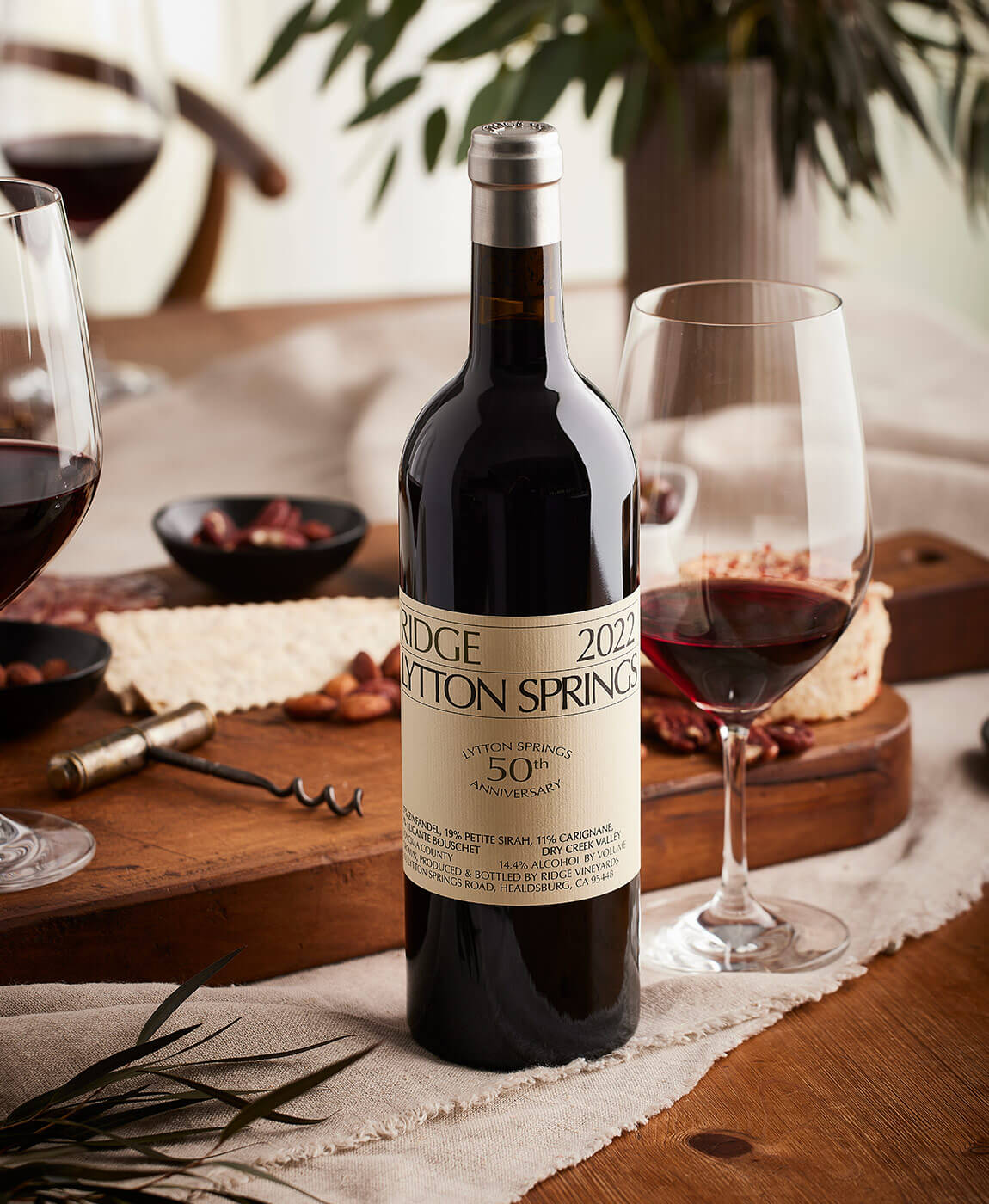
Last year we had the opportunity to celebrate the 50th bottling of our Lytton Springs, which was the 2022 vintage. One Lytton Springs bottling from each decade accompanied the incredible lunch catered by Single Thread, a beloved Healdsburg restaurant with three Michelin stars. Tasting all these old Lytton Springs was so humbling. The 1974 and 1984 Lytton Springs were striking, in that they both retained notes of primary fruit and freshness. Of course, secondary and tertiary notes have developed in both wines, but the layers of flavor and texture in these wines was mesmerizing. It initiated a conversation about why Lytton Springs, a zinfandel based field blend, can age so well.
After the event, Liz Thach, MW wrote a piece for Forbes titled, “Why An Aged Zinfandel Wine Can Taste Like Bordeaux—At Ridge Lytton Springs.”
“Shauna noted that the fact that the old vineyards were planted as field blends is part of what allows them to age so well. Just like a great Bordeaux is a blend of grapes, so is an old-vine zinfandel if sourced from a field blended vineyard. ‘We have data that suggests that not all zinfandel ages well,’ reported Shauna. ‘Those that age well have moderate alcohol, generally in the 12.5-13.8% range, a lower pH, meaning the wine is more balanced, and are generally a blend of grapes.”
‘A great wine transcends the varietals.’
–John Olney, Head Winemaker and COO
We welcomed the opportunity to engage in this conversation about what makes certain zinfandels ageable. For the most part, we only have examples of zinfandel bottlings from the past 50-60 years to draw these conclusions. We don’t know if zinfandel field blends can age as well as certain cabernets. We look forward to tasting the 2025 Lytton Springs in 2075, and discussing the remaining primary fruit components then.
—Shauna Rosenblum, Winemaker, Lytton Springs
Wait!
In order to qualify for user related discounts, you must log in before proceeding with checkout. Click the button below to log in and receive these benefits, or close the window to continue.
Log In